 The International Accreditation Forum (IAF) and the International Laboratory Accreditation Cooperation (ILAC) held their much-anticipated IAF-ILAC Annual Joint Meetings in Montreal, Canada, from November 6th to 15th, 2023. This event brought together key industry leaders, experts, and stakeholders from across the globe to discuss and strategize on matters pivotal to accreditation and conformity assessment. Among the attendees was Tracy Szerszen, President and Matthew Sica, Technical Program Manager. Their presence marked PJLA’s commitment to staying at the forefront of industry standards and best practices.
The thorough schedule included meetings of the ILAC Inspection Committee (ILAC IC), the ILAC Executive Committee, the IAF/ILAC Joint Development Support Committee (JDSC), as well as 15 working groups (WGs) and five task forces (TFs). These meetings provided attendees with opportunities to forge new partnerships, exchange ideas, and explore potential areas for cooperation. These interactions were crucial in strengthening relationships among accreditation bodies and fostering a spirit of collaboration in the industry.
In recent years, ILAC and IAF opted for virtual meetings due to the pandemic and were therefore unable to have official MRA signing ceremonies for new accreditation bodies and those that had expanded into new areas. Since returning to in-person meetings, PJLA was finally recognized this year for our expansion into Proficiency Testing Provider Accreditation (PTP).
As the meetings drew to a close, there was a sense of optimism and commitment among participants to work towards further enhancing the credibility and effectiveness of accreditation practices. The 2023 IAF-ILAC Annual Joint Meetings set the stage for continued advancements and collaborations that will shape the future of accreditation and conformity assessment on a global scale.
 As we celebrate World Quality Week from November 6-10, 2023, the spotlight is on a theme that resonates across industries: “Quality: realizing your competitive potential.” World Quality Week serves as an annual reminder to organizations worldwide about the importance of quality in their operations.
 As the cannabis industry continues to grow and evolve, ensuring product safety and quality has become vital. Cannabis testing laboratories play a critical role in this process by analyzing samples for potency, contaminants, and other crucial parameters. To meet the highest standards of quality assurance and compliance, laboratories can pursue ISO/IEC 17025 accreditation. This internationally recognized standard outlines the requirements for the competence, impartiality, and consistent performance of testing and calibration laboratories. Here are 9 ways ISO/IEC 17025 accreditation can impact a cannabis testing laboratory.
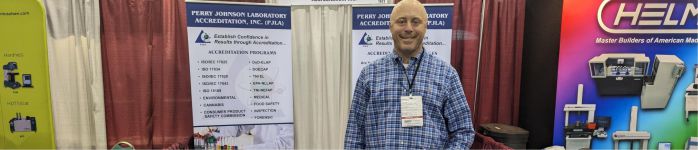 The 5th biennial Quality Show held at the Donald E. Stephens Convention Center in Rosemont, IL, from October 24-26, 2023, brought together industry leaders, experts, and innovators in the field of quality technology and equipment. Among the attendees was Sean Donnellan, Regional Sales Manager representing Perry Johnson Laboratory Accreditation, Inc. (PJLA). With a keen eye for the latest trends in dimensional inspection, calibration, and testing, his presence at the event marked a significant return for PJLA to a show that has previously been a staple for the PJLA team. After a hiatus, Sean expressed his delight in being back at the show, highlighting its importance in the growth and development of their team.
 The ACIL 2023 Annual Meeting, held from October 10th to 12th at the Hilton San Diego Gaslamp Quarter in San Diego, California, was a pivotal event for members of the American Council of Independent Laboratories (ACIL). Perry Johnson Laboratory Accreditation, Inc.’s (PJLA) President, Tracy Szerszen, was able to attend this year, participating and cultivating relationships with fellow members.
  The journey of ISO/IEC 17025 accreditation can be both daunting and rewarding. The standard, specifying the general requirements for the competence of testing and calibration laboratories, demands meticulous preparation and a keen understanding of its intricacies. Here are some valuable insights I wish I had known before my first ISO/IEC 17025 assessment.
 In recent years, the cannabis industry has seen a remarkable surge in growth and acceptance worldwide. This expansion is not only attributed to shifting societal attitudes but also to the crucial role played by testing labs. These facilities are the unsung heroes, working diligently behind the scenes to ensure that consumers have access to safe, high-quality cannabis products.
  The Cannabis Science Conference held in Providence, Rhode Island, was a testament to the incredible strides being made in the cannabis industry. This gathering of experts, enthusiasts, and pioneers showcased the latest advancements in cannabis science, fostering a sense of community and sparking discussions that will undoubtedly shape the future of this dynamic field. Here are some of the key takeaways and highlights from this transformative event.