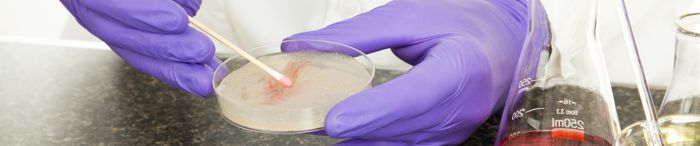
 Matthew Sica, a Technical Program Manager at Perry Johnson Laboratory Accreditation, Inc. (PJLA), recently hosted an informative webinar focused on the integration of Department of Energy Consolidated Audit Program – Accreditation Program (DOECAP-AP) with existing Department of Defense Environmental Laboratory Accreditation Program (DoD ELAP) accreditation. The session aimed to help laboratories understand the specific requirements of DOECAP-AP and determine suitability for pursuing accreditation.
PJLA plays a major role in various accreditation domains, including testing, calibration, medical laboratories, reference material producers, and inspection bodies. PJLA’s accreditations also extend to government programs like the FDA Laboratory Accreditation for Analyses of Food (LAAF), FDA Accreditation Scheme for Conformity Assessment (ASCA), along with DoD ELAP and DOECAP-AP.
The presentation delved into specific DOECAP-AP requirements, elucidating areas where the program differs from DoD-ELAP. Notably, Sica highlighted the alignment between DOECAP-AP and the TNI 2016 standard, indicating that over 90% of DOECAP-AP criteria overlap with DoD ELAP accreditation. Sica outlined specific clauses unique to DOECAP-AP, focusing on proficiency testing, technical and quality management responsibilities, safety inspections, record-keeping, and hazardous material management.
Key points included the necessity for a proficient technical and quality management team, safety inspection protocols, detailed record-keeping with customer notifications, documentation of deviations from procedures, and stringent waste management and health & safety practices. These points ensure compliance with federal and state regulations, minimize risks, and guarantee the maintenance of a safe working environment.
The presentation concluded with a PowerPoint slide breaking down DOECAP-AP’s unique requirements. A PDF version of that slide is available upon request via email ([email protected]). Acknowledgments were also extended to Steve Clark and Alyssa Wingard from the U.S. Department of Energy for the review of our presentation and for giving PJLA the opportunity to present on this topic.
Want more information on bridging the gap between DoD ELAP and DOECAP-AP? Reach out to PJLA today! Let us help evaluate your readiness and suitability for pursuing DOECAP-AP. Email us at [email protected] or call (248) 519-2603.
To watch the full webinar, head over to the PJLA YouTube channel here: https://www.youtube.com/watch?v=xqFCEkW0VKk
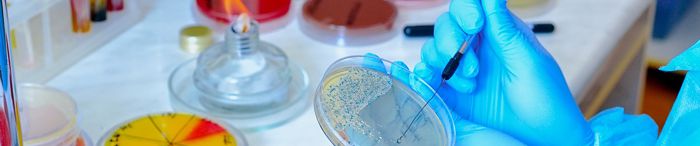 In the realm of food safety, the discourse surrounding Rapid Microbiological Methods (RMM) has been both progressive and contentious. The debate centers on whether these methods, once hailed for their efficiency in pathogen detection, remain indispensable. The landscape has transformed significantly over the years, with an increasing reliance on outsourcing pathogen samples due to safety concerns inherent in in-plant food laboratories.
 Perry Johnson Laboratory Accreditation, Inc. (PJLA) joyfully welcomed assessors back to Troy, Michigan, for our first in-person Annual Training since December 2019. The gathering, held on December 7th and 8th, marked a pivotal moment, fostering an atmosphere for teamwork and professional growth.
 In the constantly evolving landscape of the laboratory industry, staying attuned to current trends and foreseeing future developments is paramount for success. Today, we’ll explore five prominent shifts shaping the industry and how they impact the dynamics of hospital-based laboratories.
 Call For Presenters: TNI Hosting PFAS Virtual Workshop
 The holiday season is a time for joy, togetherness, and of course, delicious meals shared with loved ones. As you embark on creating culinary delights, it is crucial to prioritize safety in the kitchen. Here are some tips to keep in mind for a safe and stress-free cooking experience during the season.
 The International Accreditation Forum (IAF) and the International Laboratory Accreditation Cooperation (ILAC) held their much-anticipated IAF-ILAC Annual Joint Meetings in Montreal, Canada, from November 6th to 15th, 2023. This event brought together key industry leaders, experts, and stakeholders from across the globe to discuss and strategize on matters pivotal to accreditation and conformity assessment. Among the attendees was Tracy Szerszen, President and Matthew Sica, Technical Program Manager. Their presence marked PJLA’s commitment to staying at the forefront of industry standards and best practices.
 As we celebrate World Quality Week from November 6-10, 2023, the spotlight is on a theme that resonates across industries: “Quality: realizing your competitive potential.” World Quality Week serves as an annual reminder to organizations worldwide about the importance of quality in their operations.
 As the cannabis industry continues to grow and evolve, ensuring product safety and quality has become vital. Cannabis testing laboratories play a critical role in this process by analyzing samples for potency, contaminants, and other crucial parameters. To meet the highest standards of quality assurance and compliance, laboratories can pursue ISO/IEC 17025 accreditation. This internationally recognized standard outlines the requirements for the competence, impartiality, and consistent performance of testing and calibration laboratories. Here are 9 ways ISO/IEC 17025 accreditation can impact a cannabis testing laboratory.
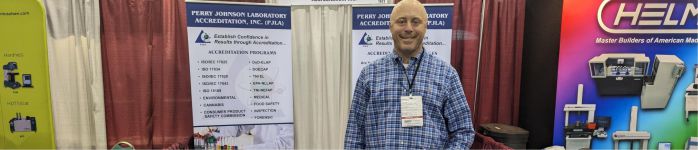 The 5th biennial Quality Show held at the Donald E. Stephens Convention Center in Rosemont, IL, from October 24-26, 2023, brought together industry leaders, experts, and innovators in the field of quality technology and equipment. Among the attendees was Sean Donnellan, Regional Sales Manager representing Perry Johnson Laboratory Accreditation, Inc. (PJLA). With a keen eye for the latest trends in dimensional inspection, calibration, and testing, his presence at the event marked a significant return for PJLA to a show that has previously been a staple for the PJLA team. After a hiatus, Sean expressed his delight in being back at the show, highlighting its importance in the growth and development of their team.